Unenroll vs Disenroll both mean to remove yourself from a program, but they are not interchangeable. Unenroll is the correct form for most everyday situations like dropping a college class. Disenroll is reserved for formal or official contexts such as government benefits. You should choose based on the setting, not personal preference.
The mix-up comes from the prefixes un- and dis- which both reverse an action. The letter difference is a single “s” that changes the sound and tone of the word. This guide will show you exactly when to use each form. You will learn clear rules that end the confusion for good.
Quick Answer
This part gives the core verdict and a simple breakdown of when each word works. It will help you choose the right term quickly, whether you are writing an email or filling out a form. For academic settings, use unenroll for dropping a course. For insurance or government programs, disenroll is more appropriate. This guide saves you time and prevents mistakes.
Simple Breakdown
Both unenroll and disenroll are correct English words. Unenroll appears more often in everyday American English, especially for dropping a class. Disenroll is used in formal documents, insurance, and official programs. Choose based on your audience and context. For example, a university website might say “unenroll from a. Course.” A health insurance form might say “disenroll from the plan.”.

What Does Unenroll Mean?
This section explains the meaning of unenroll and shows how it is used. It also covers why the word matters in writing and the idea of control behind it.
Examples of Unenroll
Unenroll means to withdraw from a course, membership, or service. You might unenroll from a class, a newsletter, or an online subscription. For example: “I need to unenroll from the biology lecture.” “She unenrolled from the gym. After moving.” Another example: “He unenrolled from the email list.” This word fits many everyday situations.
It’s About Control
Unenroll often implies a personal decision. The person chooses to leave on their own. It sounds less formal than disenroll and fits situations where the user takes action. For instance: “You can unenroll from emails at any time.” Another example: “Students. Unenroll from a class via the online portal.” This word emphasizes individual choice.
Why It Matters in Writing
Using unenroll correctly shows you understand modern English usage. Many schools and websites use it. Getting the word right avoids confusion. It also makes your writing sound natural and clear to native speakers. For instance, a university portal uses “unenroll” for course drops. A newsletter sign-up page uses “unenroll” for unsubscribing. This consistency helps readers.

What Does Disenroll Mean?
Disenroll means to remove someone from a program or list, often by an authority. It is common in healthcare, military, and official enrollment systems. For example: “The insurance company disenrolled him after nonpayment.” “Students may be disenrolled for missing too many classes.”

Unenroll and Disenroll in American and British English
Both words appear in American and British English, but with different frequencies. Unenroll is far more common in the United States. Disenroll is used more in the United Kingdom, especially in formal contexts. But, neither is exclusive to one region. For example, a UK university might use “disenroll” in official policies. An American insurance form might also use “disenroll.” Context matters more than region.

Difference Between Unenroll and Disenroll
This section compares the two words directly. It includes a detailed table that lists their differences. The table covers meaning, formality, and typical usage. It also explains why the noun forms matter. For instance, choosing the right noun can affect the tone of official documents. See Merriam-Webster grammar and usage guide for more.
Detailed Comparison Table
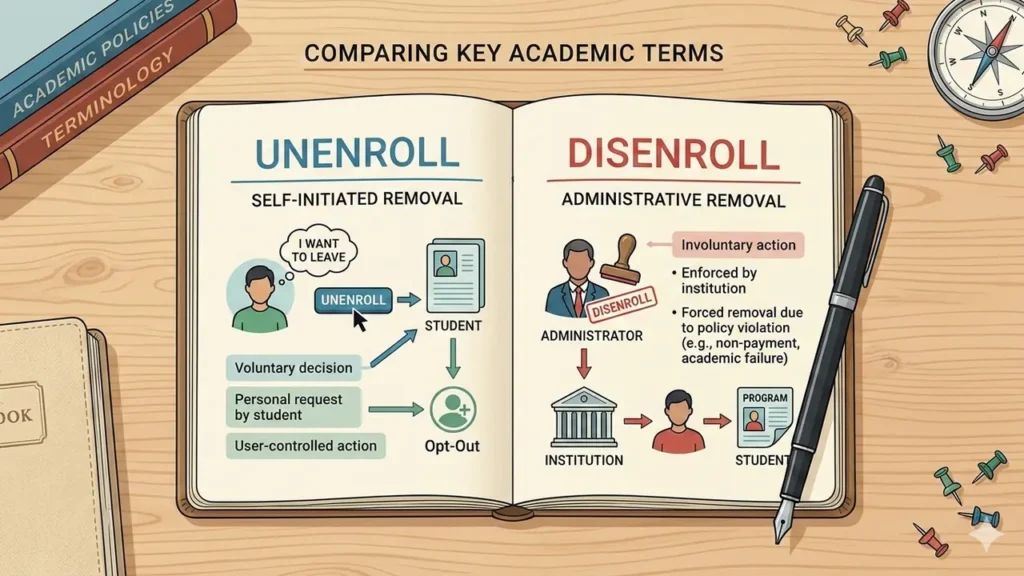
The table below shows the key differences between unenroll and disenroll. It covers meaning, formality, usage, and examples. For meaning, unenroll implies voluntary action while disenroll suggests an administrative removal. In formality, unenroll is more common in everyday language. The examples show each word in a full sentence.
| Aspect | Unenroll | Disenroll |
|---|---|---|
| Meaning | Withdraw from a course or service | Remove from an official program |
| Formality | Less formal, everyday use | More formal, official use |
| Common contexts | Schools, emails, subscriptions | Insurance, military, benefits |
| Agent | Usually the person themselves | Often an authority or institution |
| Example | I unenrolled from the class. | They disenrolled him from the plan. |
Why the Noun Forms Matter
The nouns unenrollment and disenrollment follow the same pattern. Unenrollment is used for voluntary withdrawal, like dropping a course. Disenrollment appears in official records, such as health insurance disenrollment. Choosing the right noun reinforces the verb’s tone. For example, a student’s unenrollment from a class is a personal decision. A hospital’s disenrollment of a patient is a formal action. See Cambridge Dictionary English grammar guide for more.

Context Matters More Than You Think
This part shows how context changes which word fits best. It focuses on academic settings as a key example. In a university, a student can unenroll from a course online. The school may disenroll a student for nonpayment of tuition. These contexts highlight the voluntary versus administrative distinction. Knowing this helps writers choose the precise term.
Academic Settings
In schools, unenroll is the standard word for students dropping a class. You might see “unenroll now” on a portal. Disenroll is used when the school removes a student for policy violations. For example: “The university disenrolled him for academic dishonesty.” Another example: “She decided to unenroll. From the seminar due to a schedule conflict.” These examples show the active versus passive roles.

How to Use Unenroll in a Sentence
This section gives practical guidance for using unenroll correctly. It includes example sentences that show natural usage in different scenarios. For instance, “I need to unenroll from the online course before the refund deadline.” Another. Example: “Please unenroll me from the newsletter.” These sentences show voluntary action by the user. The guidance helps avoid confusion with disenroll in formal writing.
Examples of Unenroll in Sentences
Unenroll works best when you are talking about your own choice. You can say “I plan to unenroll from the chemistry lab.” Another example:. “Please unenroll me from the mailing list.” It sounds natural in emails and forms. Use it for actions you control. Many online portals use the word unenroll for self-service. Students often click an unenroll button to drop a course. This term feels friendly and direct.
How to Use Disenroll in a Sentence
This section explains how to use disenroll properly. It focuses on formal and official contexts where an institution takes action. For example, a university may disenroll a student for nonpayment. A health plan might disenroll a member who no longer qualifies. These actions come from an authority, not the individual. The word carries a sense of administrative procedure. Use disenroll when the organization initiates the removal.
Examples of Disenroll in Sentences
Disenroll fits when an organization removes someone. For instance: “The program disenrolled all noncompliant members.” “She was disenrolled. From the health plan after changing jobs.” It sounds official and authoritative. Avoid it for casual personal actions. Insurance companies often disenroll members who miss premium payments. Schools may disenroll students who fail to attend classes. This term signals a formal decision by an institution.
Disenroll vs Unenroll Examples by Scenario
This table shows which word fits common situations. It helps you pick the right term based on who acts and how formal the setting is. For personal requests, unenroll is the better choice. For official removals, disenroll works best. The table includes examples like dropping a course versus being expelled. It also covers email sign-ups and government program exits. Use the table as a quick reference guide.
| Scenario | Word to Use |
|---|---|
| Dropping a college course | Unenroll |
| Insurance plan removal by company | Disenroll |
| Unsubscribing from a newsletter | Unenroll |
Common Mistakes in Unenroll vs Disenroll
The biggest mistake is using disenroll for personal actions like dropping a class. Another error is thinking one word is always wrong. Both are correct, but context matters. Avoid disenroll in casual emails and unenroll in official legal documents. For instance, do not say “I disenrolled from the club.” Instead. Say “I unenrolled.” In a court filing, use disenroll to describe an agency’s action. Knowing the context prevents confusion.
One Word Changes Everything
Choosing the wrong word can confuse your reader. If you say “I was disenrolled from the course,” it sounds like the school removed you. But if you meant you chose to leave. Say “I unenrolled.” The difference in tone can change the meaning of your message.
Memory Tricks to Never Mix Them Up Again
Think of un- as “undo” for your own actions: you undo your enrollment. Unenroll starts with U for “you.” Dis- sounds like “dismiss” – an authority dismisses you. Disenroll starts with D for “done by others.” This simple link works every time. For example, when you quit a gym, you unenroll. When the gym cancels your membership, they disenroll you. The mnemonic helps you choose quickly.
When to Use Disenroll vs When to Use Unenroll
Use unenroll when you are the one taking action: “I want to unenroll from the webinar.”. Use disenroll when an organization or rule removes someone: “The system disenrolled inactive users.” If in doubt. Choose unenroll for everyday writing. Many style guides recommend unenroll as the default choice. For example, a patient unenrolls from a health plan voluntarily. Disenroll is reserved for administrative actions like removing non-compliant members.
Why People Confuse Unenroll and Disenroll
Both prefixes mean “to reverse,” so the core idea is the same. Many writers assume one is a misspelling of the other. Regional habits add to the confusion – Americans see unenroll more, Brits see disenroll more. Neither is wrong, but each has a proper place.
Mini Quiz: Unenroll vs Disenroll
This quiz tests your understanding of when to use each word. Answer the questions below to check your knowledge. Each question focuses on a common situation you might encounter in writing or conversation. The quiz includes ten multiple-choice questions that test real-world scenarios like emails and forms. Each question gives immediate feedback to help you learn the correct usage quickly.
Fill in the Blank
1. She decided to ___ from the yoga class. (unenroll / disenroll) Answer: unenroll – it is a personal choice. 2. The hospital ___ the patient from the trial. (unenrolled / disenrolled) Answer: disenrolled – the hospital took action. 3. You can ___ from emails at any time. (unenroll / disenroll) Answer: unenroll – it is voluntary.
Spot the Error
4. “I need to disenroll from the history course.” What is wrong? Answer: Use unenroll because it is a personal withdrawal. 5. “The committee unenrolled him for breaking rules.” What is wrong? Answer: Use disenrolled because the committee acted officially. This distinction helps avoid confusion in formal writing and ensures correct usage in emails, reports, and policies.
Choose the Correct Word
6. Which sentence is correct? A) She unenrolled from the newsletter. B) She disenrolled from the newsletter. Answer: A – newsletters are casual and personal. 7. Which sentence is correct? A) The plan unenrolled nonpaying members. B) The plan disenrolled nonpaying members. Answer: B – the plan is an authority.
Frequently Asked Questions
Is unenroll a real word?
Yes, unenroll is a real word, though it is less common than disenroll. It appears in many dictionaries and is widely used in American English, especially in educational contexts. Both forms are accepted, but unenroll is often considered the more informal variant.
Which is correct: disenroll or unenroll?
Both disenroll and unenroll are correct, but their usage depends on context and region. Disenroll is the standard, formal choice in most professional and academic writing. Unenroll is more common in everyday American English and online systems. Choose based on your audience and tone.
Can you unenroll from a course?
Yes, you can unenroll from a course, and the term is frequently used by online learning platforms and universities. It simply means to withdraw your enrollment. The process typically involves submitting a request through a student portal or contacting the registrar’s office for official removal.
When should you disenroll from a program?
You should disenroll from a program when you need to formally withdraw for academic, financial, or personal reasons. This action is often required before a deadline to avoid penalties or tuition charges. Disenroll is the preferred term in official documents and institutional policies.
Is unenroll British or American?
Unenroll is primarily American English, while disenroll is used in both American and British English. British speakers tend to favor disenroll in formal writing, but unenroll appears occasionally in informal contexts. The choice often reflects regional preference rather than a strict rule.
Conclusion
The final answer for Unenroll vs Disenroll rests on who starts the action. You use unenroll when you personally choose to leave a class or mailing list. You use disenroll when an official body, like a college or insurer, removes someone from a program. This rule holds true in every formal document you will see.
Here is the best trick to keep them straight. Unenroll starts with U, just like the word “you,” meaning you do it yourself. Disenroll starts with D, just like the word “dismiss,” meaning someone dismisses you. Apply this trick, and you will pick the right word every time without hesitation.

Reyansh is a passionate English language and grammar writer who enjoys making grammar, spelling, vocabulary, and writing concepts simple and easy to understand. With a focus on clear explanations and practical examples, Reyansh creates helpful content for students, writers, and everyday English learners. His goal is to make learning English more enjoyable, useful, and accessible to everyone.